

Guides
A room-by-room guide to layered lighting
Why one ceiling light is never enough, and how to build warmth with layers.
Key takeaways
- Every room needs three layers: ambient, task and accent.
- Colour temperature between 2700K and 3000K keeps a home warm.
- Put lighting on separate circuits, or you have one setting, not three.
A single ceiling light in the middle of the room is the default in most Indian homes, and it is the reason so many well-finished rooms still feel flat after dark. Lighting is the cheapest intervention with the largest effect on how a home feels — provided it is planned in layers before the ceiling closes.
The three layers
- Ambient — the general wash that lets you move safely through the room. Cove lighting, wall-washing, or widely spaced recessed fittings.
- Task — concentrated light exactly where something is done. Under-cabinet strips, reading lights, a pendant over the dining table.
- Accent — light that draws the eye. Grazing a textured wall, lighting a niche, picking out art.
A room with all three can shift from bright and functional at seven in the evening to soft and intimate at ten. A room with one cannot do anything at all.
You should notice the light in a room, not the fittings producing it.
Living room
Start with a perimeter cove or wall-wash for ambient light rather than a central grid, which flattens faces and furniture alike. Add task light at each seat where someone actually reads. Then one accent — a textured wall grazed from close range, or a shelf lit from within. Keep the pendant, if you want one, as a sculptural object rather than the room's main light source.
Kitchen
Under-cabinet task lighting is the one upgrade nobody regrets. Overhead fittings put your own shadow directly onto the counter you are working on; a strip beneath the wall units removes it entirely. Keep the light over the hob genuinely bright and neutral, and light the interior of tall pantry units so their back halves stop disappearing.
Bedroom
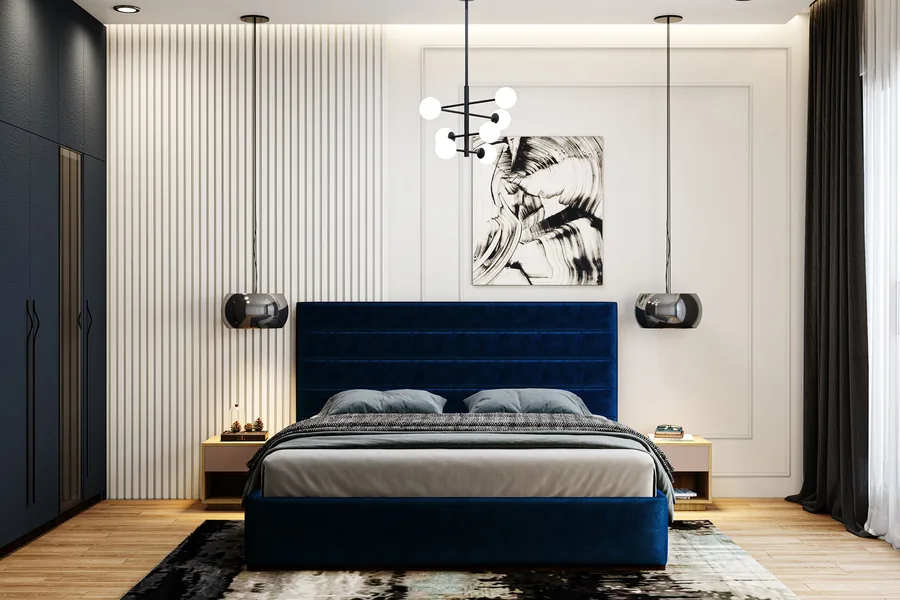
Bedrooms want the least ambient light and the most control. Bedside task lighting on individual switches, so one person can read. A low-level cove or a dimmed perimeter for the rest. Avoid downlights positioned directly above where the pillows sit — they are aimed straight at anyone lying down. If the wardrobe is fitted, light the interior on a door sensor.
Bathroom
Light the face from the sides of the mirror rather than from above. A single downlight over a mirror casts shadow into the eye sockets and under the chin, which is why bathroom lighting so often feels unflattering for reasons people cannot name.
Colour temperature and dimming
Keep domestic lighting between 2700K and 3000K throughout. Mixing warm and cool fittings in one sightline is the most common and most visible error we are asked to correct. Anything above 4000K belongs in a utility area, not a living space. And put each layer on its own circuit — layers you cannot control separately collapse into a single setting, which defeats the entire exercise.
Plan it before the ceiling closes
Almost every lighting decision is a wiring decision, and wiring is buried behind plasterboard early. Once the false ceiling is up, adding a circuit means opening it again. This is why we resolve the lighting plan alongside the layout rather than after it, particularly in a combined living and dining room where one space has to serve two moods.
For how this pairs with a restrained material palette, see warm minimalism for Indian homes. To have your own scheme planned properly, book a free consultation.
Questions
Common questions
Between 2700K and 3000K throughout the living areas. Anything above 4000K reads as institutional in a home, and mixing warm and cool fittings within one sightline is the most visible lighting error there is.
Fewer than most plans specify. A grid of downlights produces flat, shadowless light. It is usually better to use a perimeter cove or wall-wash for the ambient layer and reserve directional fittings for genuine tasks and accents.
A concealed light source set into a recess in the false ceiling, aimed at the ceiling or wall so you see the glow rather than the fitting. It is the most reliable way to make a room feel warm after dark.
Keep reading
Related articles
Vastu and modern design: a practical balance
Warm minimalism: quiet luxury for Indian homes
Ready when you are
Let's design your excellent room.
Book a free consultation with a senior designer this week — no obligation, just expert guidance and a clear estimate.
Book Free Consultation